
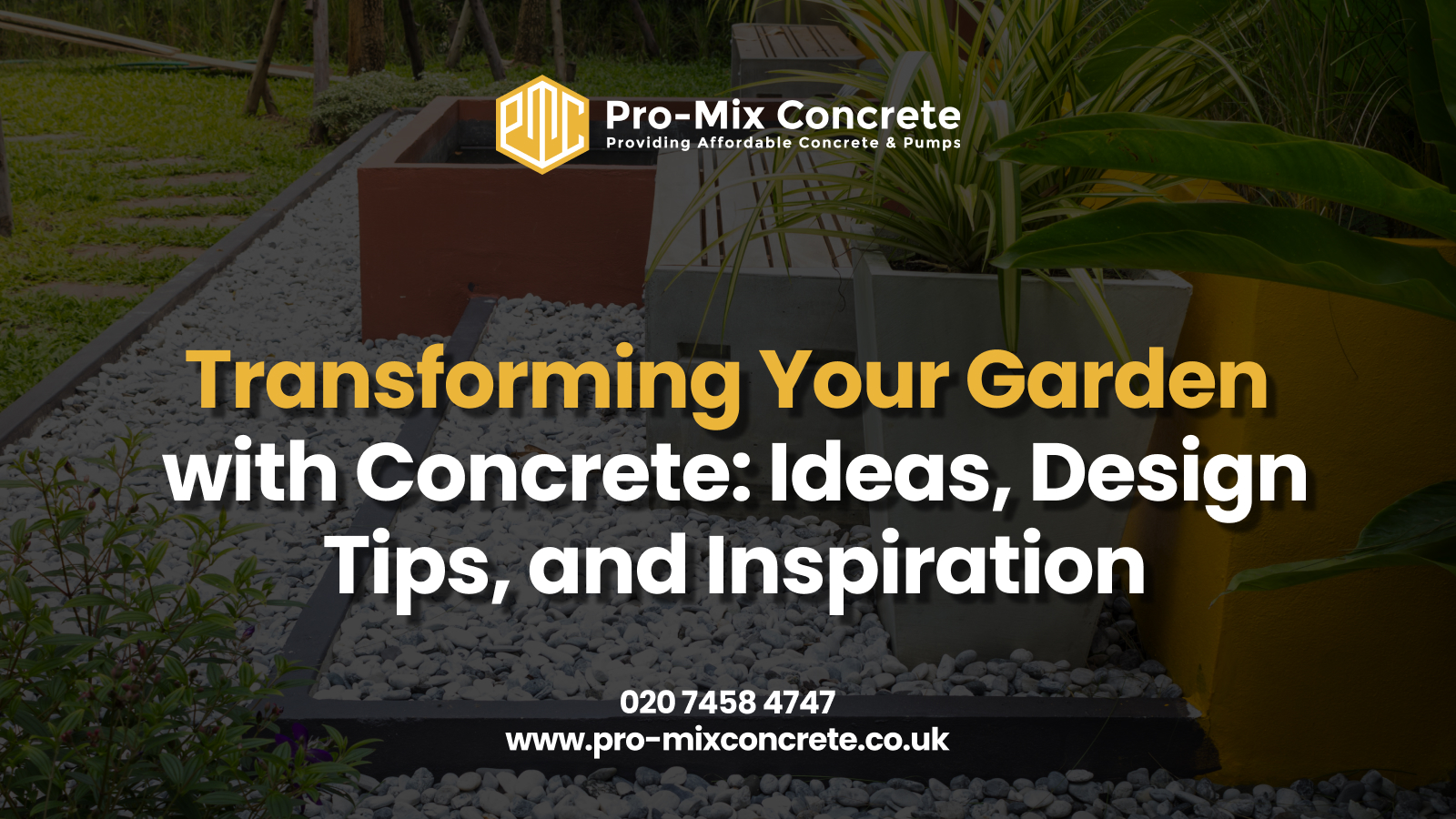
Every garden needs structure to prevent even the most beautiful plantings from feeling scattered. Concrete offers a reliable framework, standing where timber rots or stone proves too expensive. Today, domestic concrete goes far beyond plain grey slabs, incorporating colours, textures, and patterns that rival natural materials. Paths can guide movement through flower beds with permanent precision, patios become functional outdoor rooms, and raised planters define spaces without the need for annual rebuilding. Resistant to rain, frost, heat, and heavy use, concrete provides a durable foundation for memorable gardens.
Pro-Mix Concrete supplies premium mixes engineered specifically for garden applications. From pathways to patios, our concrete supplies help homeowners build outdoor spaces that perform beautifully for generations.
Why Use Concrete in Your Garden?
This material earned its place in garden design through practical performance paired with aesthetic flexibility that surprises many first-time users.
Key Benefits of Concrete Outdoors
Properly installed concrete resists cracking and deterioration caused by freeze-thaw cycles, intense sun, and heavy foot traffic. Unlike timber that eventually rots or metal that can rust, concrete maintains its structural integrity for years.
Additional advantages include:
- Minimal upkeep involving occasional cleaning and resealing every few years.
- Custom appearances through stamping, aggregate exposure, polishing, and integral pigments.
- Budget efficiency makes large poured surfaces cheaper per square metre than natural stone.
- Shape adaptability accommodating curves, integrated features, and site-specific configurations.
Surface treatments replicate flagstone, brick, or slate appearances at considerably lower material costs.
Style Possibilities and Garden Types
Concrete adapts to a variety of garden styles. Modern minimalist schemes feature smooth grey surfaces that contrast with architectural plants, while Mediterranean designs pair warm-toned finishes with terracotta and lavender. Industrial aesthetics highlight raw textures with steel planters and bold foliage. Beyond aesthetics, concrete proves especially useful in compact urban plots, where efficient use of space is essential.
Courtyard gardens can maximise usability with layouts that include built-in seating, integrated planters, and multi-level surfaces. Even traditional cottage gardens benefit from crisp edging that disappears beneath billowing flowers.
Planning Your Concrete Garden Transformation
Thoughtful preparation prevents costly corrections and ensures installations serve intended purposes effectively.
Assessing your Space and Needs
Walk the garden at different hours, observing sunlight patterns, drainage behaviour during rainfall, and natural traffic routes between doors and gates. Photograph problem spots like perpetually muddy areas or worn lawn sections, indicating where hard surfaces would improve function.
Clarify priorities before selecting specific applications:
- Entertaining requires ample gathering space near the kitchen access.
- Food production benefits from sunny raised bed positioning.
- Reduced upkeep suggests replacing high-maintenance lawn areas.
- Children’s play demands slip-resistant surfaces with soft landing zones nearby.
Design Principles: Balance, Scale, and Flow
Paved areas occupying more than half the garden risk creating unwelcoming environments regardless of material quality. Incorporate planted beds, lawn sections, and gravel zones to break up continuous hard surfaces.
Pathway widths should match formality. Narrow routes suit intimate cottage spaces, while generous walkways complement expansive properties. Connect doors, seating areas, and focal points through logical routes, avoiding awkward dead ends that force backtracking.
Concrete Patios and Terraces
These surfaces function as outdoor living rooms where daily relaxation and special gatherings unfold throughout warmer months. For patios and terraces, a concrete calculator ensures consistent slab thickness across the entire surface.
Creating a Main Outdoor Living Zone
Position gathering areas to capture optimal sun exposure for intended use times. Morning breakfast spots benefit from eastern aspects, while evening entertainment zones prefer western orientations.
Size according to furniture requirements:
- Dining sets need approximately 3 by 3 metres minimum clearance.
- Adding lounge pieces pushes comfortable dimensions toward 4 by 5 metres.
- Entertainment-focused spaces accommodating multiple groupings may reach 6 metres or larger in each direction.
Transitions between house floors and garden grades require attention. Single steps manage modest differences while multiple risers or gentle ramps accommodate larger drops. Treat these as design features using contrasting materials or decorative treads rather than afterthoughts.
Finishes, Colours, and Patterns
- Broom texturing creates subtle linear patterns, providing excellent wet-weather grip at minimal expense.
- Aggregate exposure reveals decorative stones embedded within the matrix for visual richness.
- Stamped impressions replicate natural stone, brick, or tile convincingly when installed by skilled hands.
- Integral pigmentation mixes colour throughout for fade-resistant hues penetrating beyond surface level.
Borders in contrasting tones or materials frame patio edges effectively while connecting surfaces to adjacent house materials or planting schemes.
Concrete Pathways and Garden Routes
Routes impose order while protecting lawns and beds from traffic wear that creates bare patches and mud.
Practical Access and Structure
Main corridors connecting house exits to gates, sheds, and utility zones warrant widths of 90 centimetres or more to accommodate wheelbarrows and two-person passage. Secondary trails through planted areas can narrow to 60 centimetres where single-file movement suffices, encouraging slower exploration.
Construction approaches vary by formality and function:
- Continuous poured strips suit wheelchairs, strollers, and wheeled equipment.
- Stepping arrangements set in gravel create relaxed, informal effects.
- Geometric slabs with planted joints blend structure with living softness.
Shape, Width, and Lighting
Straight routes convey efficiency and formality while curves introduce mystery by concealing destinations. Combining both approaches in different zones creates varied experiences within a single garden.
Low-voltage LED fixtures along path edges extend usability into evening hours. Recessed options embedded within surfaces produce dramatic effects for special areas. Solar-powered alternatives eliminate wiring complexity in remote sections.
Raised Beds, Planters, and Edging
Vertical elements organise spaces while creating optimal growing environments and defining boundaries between different zones.
Concrete Raised Beds for Vegetables and Flowers
Construction from this material eliminates rot, warping, and replacement cycles associated with timber alternatives. Heights between 30 and 45 centimetres accommodate most crops while reducing bending during planting and harvest tasks.
Growing advantages include:
- Defined volumes simplify fertility management through targeted amendments.
- Elevated positions warm faster in spring, extending productive seasons.
- Permanent structures supporting trellises, protective covers, and irrigation lines.
Line interiors with a waterproof membrane if growing acid-loving specimens, since alkalinity may leach into the surrounding soil gradually.
Planters, Pots, and Vertical Features
Freestanding containers introduce sculptural presence at various scales. Large floor pieces anchor patio corners and frame entrances, while elevated options on pedestals bring specimens to eye level.
Group varied heights and diameters together for dynamic arrangements. Fill with ornamental grasses for movement, succulents for modern aesthetics, or trailing species that cascade over rims, softening hard edges.
Edging and Borders
Concrete edging defines boundaries between lawns, beds, and gravel with precision that persists indefinitely. Poured curbs accommodate custom curves matching site conditions. Precast blocks provide modular simplicity for straight runs. Thin strips nearly disappear while maintaining crisp separation between materials.
Seating, Steps, and Garden Rooms
Built-in features create permanent gathering spots and manage grade changes without requiring portable furniture that demands storage and weathering.
Built-in Concrete Seating
Integrated benches eliminate wind-blown chairs and setup hassles. Seat walls surrounding fire features or specimen plantings accommodate groups during gatherings without preparation.
Enhance comfort with:
- Timber caps prevent cold-weather chill against bare surfaces.
- Weather-resistant cushions add softness for extended sitting.
- Fragrant plantings behind seats provide a sensory backdrop.
Target heights of 40 to 45 centimetres and depths of 35 to 45 centimetres for ergonomic proportions.
Steps, Platforms, and Levels
Sloped properties become assets through terraced platforms, creating distinct functional zones. Upper levels might host dining while lower areas accommodate lounging or play.
Safety specifications include consistent riser heights between 10 and 18 centimetres, tread depths of 30 centimetres minimum, non-slip textures, adequate illumination, and handrails where flights exceed three risers or serve elderly users.
Pro-Mix Concrete offers concrete mixes designed for home gardens that deliver the strength and durability needed for safe, long-lasting structures.
Concrete Water Features and Fire Elements
Speciality installations transform gardens into destination spaces engaging multiple senses and drawing gathering throughout seasons.
Fountains, rills, and ponds
Water introduces movement and sound, enlivening otherwise static compositions. Concrete forms watertight structures without liner vulnerabilities that puncture over time. Custom shapes accommodate designs impossible with prefabricated alternatives.
Wall-mounted cascades maximise impact in minimal footprints. Freestanding fountains create focal points visible from multiple vantage locations. Channels and rills guide water linearly through spaces. Reflecting pools bring sky and surroundings into compositions through still surfaces.
Fire pits and fireplaces
This material withstands intense heat while accepting decorative treatments, integrating with the surrounding hardscape. Bowls, sunken pits, and full hearths all succeed with concrete construction.
Surrounding surfaces should handle spark exposure without damage. Position seating at distances allowing comfortable warmth without excessive heat. Consider prevailing winds directing smoke away from gathering areas and neighbouring properties.
Sculptural Features, Statues, and Art
Decorative elements personalise spaces while creating focal points, anchoring compositions and expressing individual taste.
Concrete Statues and Focal Pieces
Figurative sculptures suit traditional settings while geometric abstracts complement contemporary schemes. Placement strategies maximise impact position pieces at path terminals, rewarding arrival, at sightline endpoints visible from windows, or as surprise discoveries emerging around corners.
Recurring shapes or finishes throughout the garden unify separate zones into coherent compositions. Restraint typically outperforms abundance. Fewer carefully placed pieces prove more effective than scattered collections competing for attention.
DIY Decorative Projects
Smaller cast creations offer accessible personalisation opportunities. Custom stepping stones incorporate embedded shells or handprints. Birdbaths from stacked bowl forms provide wildlife water sources. Lantern housings shelter candles or LEDs for an evening atmosphere. Decorative screens cast interesting shadows while providing privacy.
Pigments, aggregate variations, and texture treatments allow unique pieces unavailable commercially.
Softening Concrete with Plants and Materials
Strategic combinations prevent hard surfaces from overwhelming landscapes regardless of construction quality.
Choosing Plants to Complement Concrete
- Ornamental grasses like Miscanthus, Pennisetum, and Stipa deliver constant movement, contrasting beautifully against solid surfaces.
- Climbers, including wisteria and clematis, introduce vertical greenery counterbalancing horizontal paving.
- Architectural specimens such as phormiums and yuccas echo structural presence through bold forms.
- Groundcovers between pavers blur boundaries effectively. Creeping thyme, chamomile, and Corsican mint tolerate light foot traffic while releasing fragrance when brushed.
Mixing textures and finishes
Layer complementary materials for visual and tactile richness:
- Timber decking introduces warmth adjacent to cool grey tones.
- Gravel provides textural contrast while aiding drainage.
- Brick accents connect new construction to existing architecture.
- Metal edging adds contemporary definition between zones.
Varying finishes within single projects, smooth patio transitioning to exposed aggregate path creates interest exceeding uniform treatments.
Sustainability and Environmental Considerations
Responsible use acknowledges production impacts while leveraging advantages that offset concerns across extended service life.
Reducing the Environmental Impact of Concrete
Cement manufacturing generates substantial carbon emissions. Thoughtful garden design applies concrete strategically for structural elements rather than maximising paved area.
Environmentally conscious approaches include permeable formulations allowing rainwater infiltration, lighter surface colours reflecting rather than absorbing heat, abundant shade tree integration moderating temperature extremes, and mixes incorporating fly ash or slag partially replacing Portland cement.
Longevity and Low Maintenance
Extended service life offsets initial environmental costs when installations remain functional across decades. Minimal upkeep eliminates ongoing resource consumption for repairs and replacements that alternatives demand.
Periodic sealing protects against staining and weathering. Occasional pressure washing removes accumulated grime. Prompt crack repair prevents moisture infiltration, accelerating deterioration. Avoiding de-icing chemicals reduces surface scaling in cold climates.
Practical Tips: DIY vs Professional Installation
Matching project scope to skill level ensures successful outcomes, avoiding costly mistakes or safety hazards.
When You Can DIY
Suitable projects for confident homeowners include:
- Individual stepping stones using purchased or improvised moulds.
- Small pads for bins, planters, or garden equipment.
- Precast edging installation along bed and path borders.
- Decorative planters and ornaments in manageable sizes.
Success requires following mixing instructions precisely, allowing adequate curing time, and wearing appropriate protective gear, including gloves, eye protection, and dust masks.
When to Call a Pro
Professional expertise proves worthwhile for:
- Surfaces exceeding 10 square metres require consistent finishing across large areas.
- Retaining walls manage significant grade changes with structural demands.
- Steps where safety-critical dimensions matter.
- Integrated drainage prevents water accumulation.
- Decorative finishes require specialised equipment.
Professionals provide proper base preparation, appropriate reinforcement, skilled technique, and warranties protecting against defects.
Before-and-After Inspiration and Next Steps
Garden transformations often start small and expand as confidence grows. Begin with one key feature, such as a patio, which can inspire matching pathways. Successfully raised beds may lead to adding decorative planters, and a well-used fire pit often encourages surrounding seating walls to create inviting spaces.
To plan effectively:
- Assess your garden: Walk through your space at different times of day, noting areas that need improvement or get heavy use.
- Document conditions: Photograph current layouts to reference during design discussions.
- Gather inspiration: Look at completed projects online, in publications, or around your neighbourhood.
- Consider local factors: Take climate, sunlight, drainage, and maintenance requirements into account when adapting ideas from other regions.
Following these steps ensures a thoughtful, gradual transformation that builds confidence while creating a functional and aesthetically pleasing garden.
Bottom Line
Concrete can transform gardens from challenging landscapes into structured, attractive outdoor spaces that serve families across seasons. Patios anchor gathering areas, pathways guide exploration, raised beds optimise growing conditions, water features add sensory richness, and fire elements extend seasonal use. Thoughtful design balances hard surfaces with living softness, and using quality materials with proper techniques ensures lasting performance. Careful planning prevents costly revisions, while skilled execution rewards your investment with decades of enjoyment.
Pro-Mix Concrete has supported homeowners and contractors throughout the region by supplying concrete engineered specifically for outdoor applications. Our technical team understands the demands of garden projects, from pathway performance to decorative finish consistency. We provide tailored product recommendations, accurate quantity estimates, and reliable delivery to keep projects on schedule.
Get Started With Your Garden Project Today: 020 7458 4747
Frequently Asked Questions
Is concrete good for a garden?
Yes, concrete works excellently when applied thoughtfully for paths, patios, and structural elements. The material provides lasting performance and clean aesthetics while plantings contribute essential softness and natural beauty to balance hard surfaces.
Will concrete harm my plants or soil?
No, concrete does not directly harm plants when installed properly. However, surfaces positioned near planting areas may gradually increase soil alkalinity over time. Lined beds, proper drainage, and periodic amendments protect root systems effectively.
Can I plant over an old concrete patio?
No, direct planting into solid slabs remains impossible since roots cannot penetrate the surface. However, raised beds placed on top, deep containers, or breaking sections to create pockets enable productive gardening over existing concrete areas.
Is a concrete patio cheaper than pavers for transforming a garden?
Yes, poured surfaces typically cost less initially than paver or natural stone alternatives, especially across larger areas. Extensive finish and colour options remain available within more modest budgets compared to premium paving materials.
How do I stop my garden from looking too harsh with concrete?
Balance hard surfaces with abundant plantings, decorative containers, gravel accents, timber elements, curved forms, and warm evening lighting. These organic textures create an inviting rather than stark appearance when combined thoughtfully with concrete features.
Can I DIY concrete projects in my garden, or do I need a professional?
Smaller projects like stepping stones, compact pads, and decorative planters suit confident DIY execution. Larger installations and structural features benefit from professional involvement, ensuring safety and longevity.

- Dennis Broderick
- Dennis Broderick is the founder and owner of Pro-Mix Concrete Company, a trusted name in ready-mix concrete solutions across the UK. With over 20 years of hands-on experience in the construction and concrete industry, Dennis brings unmatched expertise, practical insights, and a commitment to quality on every project - from residential driveways to large-scale commercial developments.
 BlogAugust 27, 2026Why Concrete Consistency Matters in Construction
 BlogAugust 26, 2026Ready Mix vs On Site Mix Concrete for Foundations
 BlogAugust 25, 2026How to Choose the Right Concrete for a Foundation
 BlogAugust 23, 2026What Is Concrete Screed and Why Is It Important?