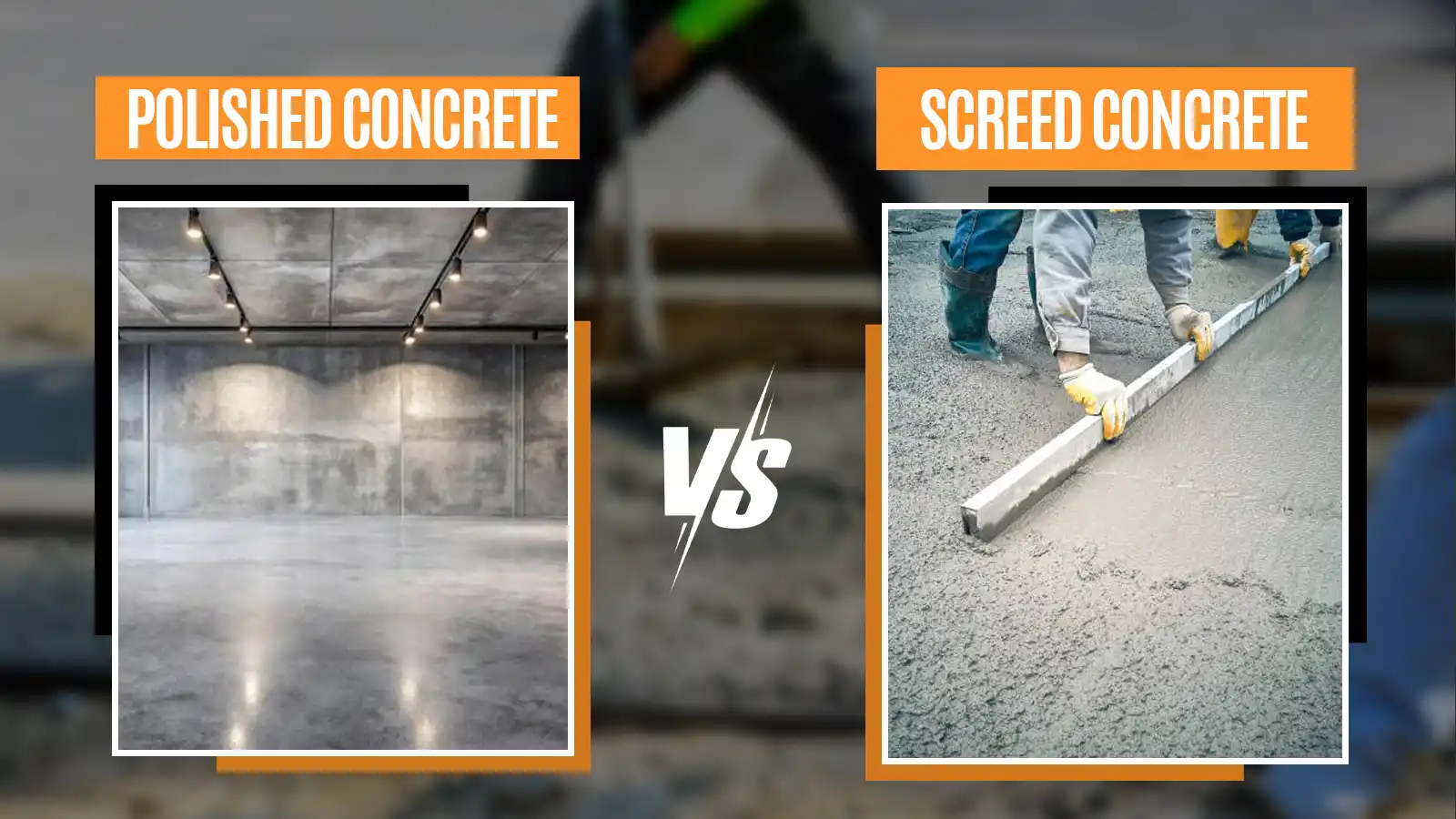
Choosing between polished concrete and screed concrete depends on your project requirements, budget, and desired finish. Polished concrete offers a glossy, decorative surface achieved by grinding and sealing existing concrete, while screed concrete provides a smooth, level underlayer perfect for supporting various floor finishes. Both serve different purposes, with polished concrete excelling in aesthetic applications and screed concrete functioning primarily as a preparatory or functional layer.
Understanding the screed concrete vs polished concrete debate helps you make smarter flooring decisions. Whether you’re renovating a home, setting up a warehouse, or building commercial space, getting the floor right matters more than most people realise.
Concrete Flooring Options
Concrete flooring comes in multiple forms, each designed for specific purposes. The confusion between polished concrete and screed concrete stems from their different roles in construction. One’s a finished floor, the other’s usually what goes underneath.
Getting clear on what each type actually does saves time, money, and frustration down the road.
What is Polished Concrete?
Polished concrete is existing concrete that’s been mechanically ground, honed, and polished to create a smooth, glossy surface. The process uses progressively finer grinding tools with diamond abrasives to refine the concrete surface. This creates a durable, aesthetically pleasing floor with varying levels of shine.
The polishing process exposes the aggregate (stones and sand) within the concrete, creating unique patterns and visual depth. You can choose different levels of exposure and gloss, from matte finishes to high-gloss mirror-like surfaces.
Polished concrete works as a finished floor. You walk on it. It’s what people see. The process transforms rough, industrial-looking concrete into something sleek and modern.
What is Screed Concrete?
Screed concrete is a thin layer of concrete or cement mix applied over a base concrete slab to create a smooth, level surface. It typically ranges from 25mm to 75mm thick and serves as either a wearing surface or a base for other flooring materials like tiles, carpet, or vinyl.
Screed comes in different types:
- Traditional sand and cement screed
- Liquid flowing screed (also called self-leveling screed)
- Polymer-modified screed
- Fast-drying screed
Screed provides the flat, even surface needed for proper floor installation. Without it, uneven concrete slabs would cause tiles to crack, carpets to wear unevenly, and vinyl to bubble.
Some screeds work as finished floors in industrial settings, but most serve as the foundation for something else on top.
Key Differences in Composition and Construction
Polished concrete uses the existing structural concrete slab. Nothing gets added. The surface gets ground down and refined. The aggregate composition of the original concrete determines the final appearance. You’re working with what’s already there.
Screed concrete gets mixed and applied as a separate layer. It uses finer aggregates than structural concrete, creating a smoother finish. The mix can be adjusted for specific properties like faster drying, better bonding, or enhanced strength.
Construction timing differs significantly. Structural concrete gets poured first, then the screed gets applied after the base cures. Polished concrete can only happen once the structural slab is fully cured and stable.
Installation Processes Explained
Installation methods for polished concrete and screed concrete differ dramatically. Understanding these processes helps you plan timelines, manage expectations, and budget appropriately.
Both require skilled professionals. DIY attempts usually end badly.
Preparing the Base and Surface
For polished concrete, preparation starts with assessing the existing concrete slab. Contractors check for structural issues, cracks, spalling, or contamination. Repairs happen first. Cracks get filled with epoxy or polyurethane. Oil stains get treated. The surface must be sound and clean.
Any existing coatings need to be removed. Old paint, sealers, or adhesives get ground off. This prep work can take as long as the actual polishing, depending on the slab condition.
For screed concrete, the base slab needs cleaning and priming. Loose debris, dust, and contaminants are removed completely. A bonding agent or primer gets applied to help the screed adhere to the base concrete.
The base must be damp but not wet. Too dry, and the base sucks moisture from the screed too quickly. Too wet and bonding suffers.
Step-by-Step Polished Concrete Installation
Polished concrete installation follows a systematic grinding and polishing process:
- Initial grinding removes surface imperfections and old coatings using coarse diamond segments (30-40 grit). This stage opens the concrete pores and levels the surface.
- Grouting and repairs fill small holes and voids with epoxy or grout mixed to match the concrete colour. This creates a smooth, uniform surface for finer grinding.
- Progressive grinding moves through finer grits (80, 150, 400 grit) to refine the surface. Each pass creates a smoother finish and exposes more aggregate.
- Densification applies a chemical hardener that penetrates the concrete, reacting with it to increase density and surface hardness. This strengthens the floor and improves stain resistance.
- Final polishing uses very fine grits (800, 1500, 3000) to achieve the desired gloss level. More passes create a higher shine.
- Sealing applies a protective sealer to enhance stain resistance and make maintenance easier. Some projects skip this if the densifier provides enough protection.
The installation process can vary in duration depending on project size and desired finish.
Step-by-Step Screed Concrete Installation
Screed concrete installation varies by screed type, but traditional methods follow this pattern:
- Base preparation involves cleaning, priming, and sometimes dampening the base slab. Edge insulation or movement joints are installed if needed.
- Mixing combines cement, sand, and water in precise ratios. The mix should be fairly dry, just wet enough to bind together. Too wet and it’ll crack as it dries.
- Laying spreads the screed mix evenly across the base using screeding bars or laser-guided equipment. Thickness stays consistent throughout.
- Compacting removes air pockets and ensures good contact with the base. This happens while lying or immediately after.
- Finishing smooths the surface with floats or power trowels. The finish depends on what’s going on top. Rougher for tiles, smoother for vinyl.
- Curing requires keeping the screed moist for several days to prevent rapid drying and cracking. Plastic sheeting or curing compounds help.
Liquid screed simplifies installation. It gets pumped in and self-levels, requiring minimal manual work. It’s faster and creates exceptionally flat surfaces.
Typical Project Timelines and Curing Requirements
Polished concrete installation requires a fully cured base slab, and the duration depends on the project size and slab condition. Newer concrete hasn’t fully cured and hardened, making polishing difficult and potentially damaging.
The total timeline from base concrete to finished polished floor depends on curing and project scope.
Screed concrete requires curing before foot traffic or floor installation, with timelines varying by type and environmental conditions.
Temperature and humidity affect curing dramatically. Cold weather slows everything down. Hot, dry conditions can cause cracking if curing isn’t managed properly.
Appearance, Texture, and Design Flexibility
Visual appeal matters enormously for finished floors. Polished concrete and screed concrete offer different aesthetic possibilities.
Finish and Visual Effect
Polished concrete looks sleek and modern. The stones and sand inside the concrete show through, creating patterns that are different everywhere you look. No two sections look exactly the same, which gives it character.
You pick how shiny you want it:
- Matte (low shine, more casual)
- Satin (medium shine, most popular)
- High-gloss (mirror-like, very formal)
Bigger stones in the concrete create bold patterns. Smaller stones give a more subtle, refined look.
Screed concrete looks pretty plain – usually just flat, grey, and uniform. When it’s used as a finished floor (like in warehouses), it has a smooth but dull appearance. No depth, no character, just functional.
You can polish some screeds, but they won’t look as good as polished structural concrete. The stones are too small and don’t create the same visual interest.
Colour and Customisation Options
Polished concrete colour comes primarily from the base concrete and aggregate. Natural concrete ranges from light grey to darker charcoal, depending on cement type and aggregate colour.
Customisation options include:
- Acid staining: Creates earthy, variegated tones (browns, greens, blues) through chemical reactions
- Dye staining: Provides more vibrant, consistent colours
- Scoring and sawcuts: Creates patterns, borders, or geometric designs
- Aggregate seeding: Small decorative stones or glass are added to the surface, creating unique patterns and texture for a custom design
Screed concrete can be coloured during mixing by adding pigments. This creates uniform colour throughout the thickness. However, surface wear might expose different tones over time.
Toppings and coatings can be applied to screed for decorative effects, but these add cost and potentially reduce durability.
Modern Design Trends with Each Type
Polished concrete dominates modern and industrial design aesthetics. It’s huge in:
- Trendy retail spaces and showrooms
- Contemporary homes and loft conversions
- Modern offices and co-working spaces
- Restaurants and cafes are going for urban vibes
The trend leans toward exposed aggregate with semi-gloss finishes. People want the texture and visual interest without the maintenance challenges of high-gloss finishes.
Screed concrete rarely features in design trends as a finished floor. Its role remains mostly functional. When it does appear as a finished surface, it’s usually in ultra-minimalist or brutalist designs where the plain, industrial look is intentional.
Performance and Durability
Long-term performance matters as much as initial appearance. Floors take serious abuse, especially in commercial and industrial settings.
Load-Bearing and Traffic Resistance
Polished concrete handles extreme loads and traffic exceptionally well. The grinding and densification process actually increases surface hardness. Polished concrete can withstand forklift traffic, heavy equipment, and constant foot traffic without degrading.
The Mohs hardness scale, which measures scratch resistance from 1 to 10, rates polished concrete around 7–9, similar to natural stone. This hardness makes it highly resistant to abrasion, impacts, and scratching.
Screed concrete’s load-bearing capacity depends on its composition and thickness. Traditional sand/cement screed handles moderate loads well, but can’t match structural concrete or polished concrete for extreme applications.
Thin screeds (25-35mm) work fine for residential foot traffic but struggle under heavy point loads. Thicker screeds (50-75mm) or polymer-modified versions handle heavier use.
For industrial applications requiring serious durability, polished concrete beats screed every time.
Maintenance Needs Over Time
Polished concrete is dead easy to maintain. Sweep or dust mop regularly, damp mop occasionally with pH-neutral cleaner, and you’re done. You might need resealing every 3-5 years, though many floors never need it. There’s no coating to wear off since the surface itself is the finish.
Screed concrete needs more attention:
- Needs sealing to prevent dust and stains
- Seal wears off, needs reapplying every 1-3 years
- Unsealed screed creates constant dust
- Requires more frequent cleaning
Common Problems (Cracking, Stains, Wear)
Polished concrete can develop cracks if the base concrete cracks, though this is rare with proper joints. Stains happen if spills sit too long on matte finishes. High-traffic areas might dull after 10-15 years, but you can repolish them.
Screed concrete has more problems:
- Cracks easily if mixed wrong or cured badly
- Cracks if too thin or base prep was poor
- Can separate from base concrete (delamination)
- Cracks show through tiles and vinyl laid on top
Screed needs everything done perfectly, or problems appear quickly. Polished concrete is much more forgiving.
Application Suitability
Different projects need different flooring solutions. Matching the right type to your specific situation prevents problems and maximises benefits.
When Polished Concrete Is the Best Choice?
Polished concrete excels in:
Commercial applications:
- Retail stores and showrooms
- Restaurants and bars
- Offices and co-working spaces
- Shopping centres and malls
- Gyms and sports facilities
Industrial applications:
- Warehouses and distribution centres
- Manufacturing facilities
- Workshops and garages
- Aircraft hangars
- Cold storage facilities
Residential applications:
- Modern homes and loft conversions
- Garages and workshops
- Basements and utility rooms
- Open-plan living areas
- Kitchen and dining areas
Polished concrete works best where the aesthetic matches the space and where durability matters. It suits high-traffic areas and spaces where cleaning needs to be quick and easy.
When Screed Concrete Is the Best Choice?
Screed concrete makes sense when:
- You need to level an uneven base slab
- You’re installing floor heating systems (screed encapsulates pipes)
- You require a specific floor height or level
- You’re laying tiles, carpet, vinyl, or other floor coverings
- You need to create falls for drainage
- You’re working with renovation projects where existing floors need levelling
Screed is essential for most flooring installations. It’s not usually a choice between screed and polished concrete, but rather a question of whether you polish the structural slab or apply screed for other flooring.
In some projects, you might use both. Screed in areas getting tiles or carpet, and polished concrete in areas where you want the modern concrete look.
Environmental Considerations and Sustainability
Polished concrete scores well environmentally:
- Uses existing concrete (no additional materials)
- Lasts decades without replacement (less waste)
- Requires no VOC-emitting adhesives or finishes
- Improves lighting efficiency through reflectivity
- No off-gassing from synthetic flooring materials
The grinding process produces dust, which can be controlled with proper equipment. Water usage is minimal during polishing, while screed curing requires maintaining moisture to prevent cracking.
Screed concrete has a moderate environmental impact. It uses cement (which has high embodied carbon) but in relatively small quantities. Liquid screeds often include industrial by-products like fly ash, reducing cement content and environmental impact.
How to Choose the Right Option for Your Needs?
Making the right choice requires an honest assessment of your priorities and constraints.
Using a Concrete Calculator helps align your chosen flooring option with accurate material planning.
Decision Factors (Budget, Aesthetics, Use Case)
Budget considerations:
If you’re tight on budget and the floor doesn’t need to be beautiful, screed under basic flooring works. If you can invest more upfront for long-term savings, polished concrete pays off.
Remember to calculate lifetime costs, not just initial expenses. The cheapest option now might cost more over 10 years.
Aesthetic priorities:
If appearance matters and you want modern, industrial, or contemporary looks, polished concrete delivers. If you prefer traditional finishes like carpet, wood, or decorative tiles, screed provides the base you need.
Use case requirements:
Heavy industrial use demands polished concrete’s durability. Residential areas with varied flooring types need versatility. Commercial spaces benefit from polished concrete’s low maintenance.
Consider these factors together:
- How will the space be used?
- What aesthetic are you targeting?
- What’s your realistic budget?
- How long will you own the property?
- What maintenance can you manage?
Questions to Ask Before Committing
Before deciding between screed vs polished concrete, ask:
- What’s the condition of my existing concrete slab?
- Can the existing slab be polished, or is screed necessary?
- What’s my total budget, including installation and lifetime maintenance?
- How long do I plan to keep this flooring?
- What traffic levels will the floor experience?
- Are there any structural or moisture issues to address first?
- What’s the typical floor finish for this type of building in my area?
- Do I need underfloor heating (which typically requires screed)?
Get quotes from experienced contractors for both options. Pro-Mix Concrete provides detailed assessments and honest recommendations based on your specific situation, not just what’s easiest to install.
Bottom Line
The screed vs polished concrete decision ultimately depends on your project’s specific needs. Polished concrete offers a durable, low-maintenance finished floor with modern aesthetic appeal, ideal for spaces where the concrete look fits the design vision. Screed concrete provides the essential levelling and preparation needed for most other flooring types, serving as the foundation rather than the final surface.
Neither option is universally better. The right choice aligns with your budget, aesthetic preferences, functional requirements, and long-term plans. Polished concrete excels in durability and visual impact but requires suitable existing concrete. Screed concrete provides versatility and solves levelling challenges, but usually needs additional flooring on top.
Choose Pro-Mix Concrete for Flooring Excellence
Picking the right concrete flooring shouldn’t keep you up at night. We know concrete inside and out. At Pro-Mix Concrete, we understand the science behind what makes concrete perform brilliantly for decades. Every mix we create, every surface we finish, gets our full attention and decades of hands-on experience.
When you call us, we assess your concrete needs, honestly and transparently. Sometimes that means polishing. Sometimes it means screed. Sometimes it means both. We tell you what’ll actually work, not what’s easiest for us.
Contact us today for a detailed assessment and straight-talking advice about your flooring. We’ll show you what quality concrete work really looks like.
Frequently Asked Questions
Can screed be polished like concrete?
Some screeds can be polished, but the results differ from polished structural concrete. Screed contains finer aggregate, limiting the visual depth and character achievable. Polymer-modified screeds polish better than traditional sand/cement screeds, though neither matches structural concrete’s aesthetic.
Is screed mandatory before concrete polishing?
No, screed is not needed before polishing structural concrete. Polished concrete works directly on the base slab. However, severely damaged or uneven slabs might need repair layers before polishing. Screed would only be used if creating a new finished surface rather than polishing existing concrete.
Which surface lasts longer in heavy-duty applications?
Polished concrete significantly outlasts screed in heavy-duty applications. The grinding and densification process creates an extremely hard, abrasion-resistant surface. Screed, while durable, cannot match polished concrete’s hardness. Industrial facilities typically choose polished concrete for forklift traffic and heavy equipment use.
How do weather conditions affect installation?
Cold weather slows curing for both screed and concrete, potentially causing strength issues. Hot, dry conditions accelerate drying, increasing cracking risk without proper curing measures. Ideal installation temperatures range from 10-25°C. Extreme conditions require special additives, curing methods, or installation delays for optimal results.

- Dennis Broderick
- Dennis Broderick is the founder and owner of Pro-Mix Concrete Company, a trusted name in ready-mix concrete solutions across the UK. With over 20 years of hands-on experience in the construction and concrete industry, Dennis brings unmatched expertise, practical insights, and a commitment to quality on every project - from residential driveways to large-scale commercial developments.
 BlogFebruary 24, 2026What Is C35 Concrete Used For? Applications & Uses Explained
 BlogFebruary 24, 2026Types of Expansion Joints in Concrete: A Complete Breakdown
 BlogFebruary 23, 2026What Is C25 Concrete Used For? Uses & Applications
 BlogFebruary 22, 2026Cost Of Ready Mix Concrete Per M3 In Uk