Getting concrete from the truck to exactly where it needs to go sounds simple, but the site often gets in the way. Walls, buildings, slopes, distance, and height can all make direct discharge from a truck impossible or impractical.
That is where a concrete boom pump steps in. It extends a long folding arm over or around whatever is blocking the way and places concrete precisely where the pour needs to happen, without the truck moving at all. If your project involves height, distance, or limited access, a boom pump is worth looking into before pour day.
What a Concrete Boom Pump Does
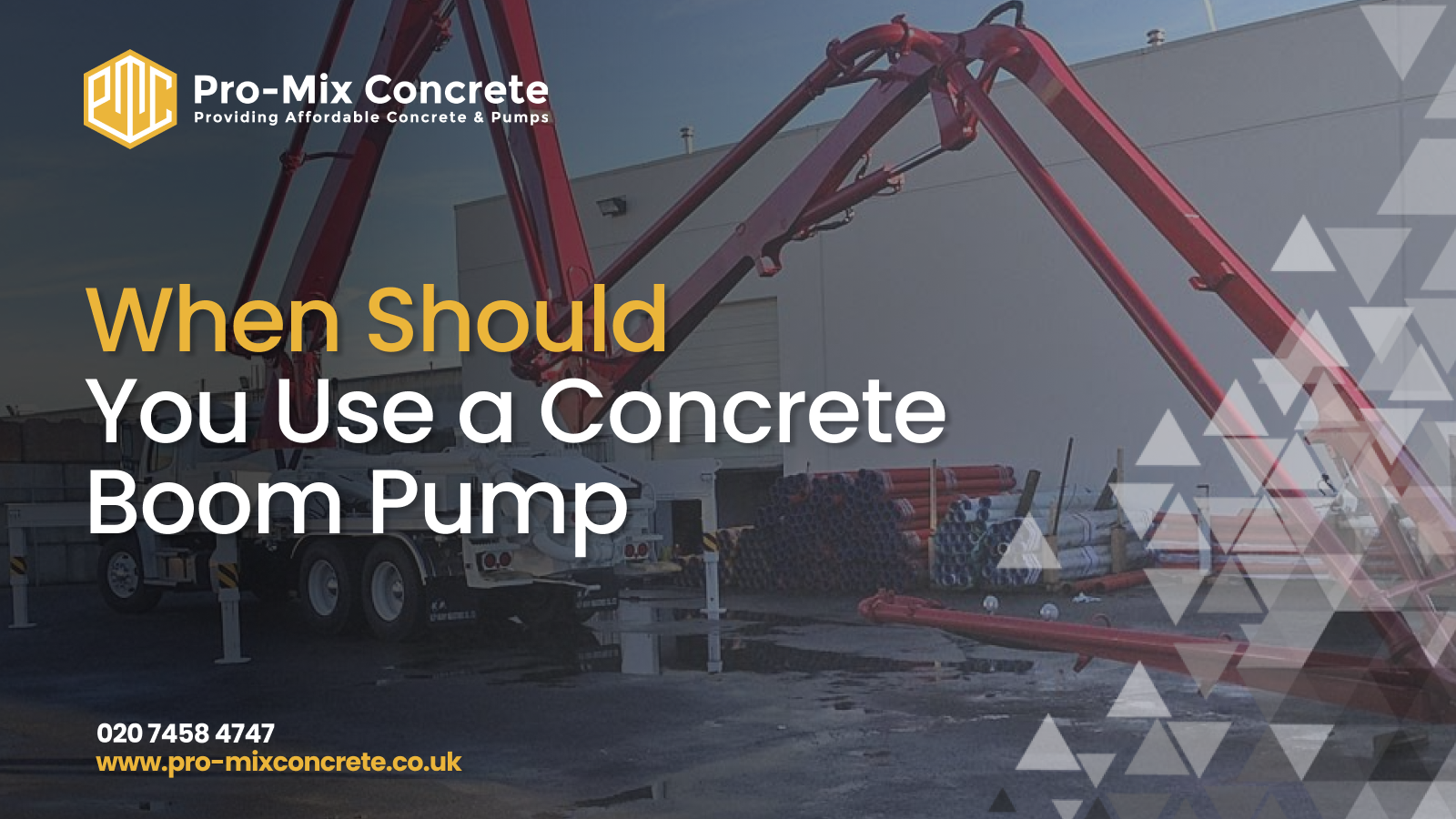
Concrete boom pumps are truck-mounted machines that combine a powerful pump with a long folding arm called a boom. The boom unfolds in sections to reach over, around, or above obstacles, and concrete is pumped through a pipeline running along the arm before being discharged at the exact point the crew needs.
How It Differs From a Ready Mix Truck
Ready mix trucks can only discharge concrete where they can physically park and tilt the drum. That limits them to ground-level pours with clear direct access. The boom pump works differently. It stays in one position while the arm moves to cover the entire pour area, so the truck stays off restricted ground and the concrete lands exactly where it needs to go without wheelbarrows, chutes, or manual labour moving it across the site.
What That Means in Practice
- Concrete reaches areas the truck itself could never access
- The pump arm articulates around corners, through openings, and at angles a fixed chute cannot manage
- Modern boom pumps range from around 24 metres to over 60 metres in reach
- Workers can focus on finishing and compaction rather than moving material
When You Should Use a Boom Pump
The decision to hire a boom pump comes down to five clear situations. When one or more of these applies to your project, a boom pump is usually the most efficient and practical solution available.
1. Pour Is Far From Where the Truck Can Park
When the placement point is more than a few metres from where a truck can park, direct discharge becomes impossible. Moving concrete by hand at that point becomes slow, expensive, and hard on the crew.
Boom pumps solve this by pumping concrete directly from the truck’s drum along the boom pipeline to the exact discharge point. No manual movement is needed at all, regardless of the distance between the truck and the pour.
Where This Situation Comes Up Most
- Urban sites where vehicles cannot drive close to the structure
- Large commercial footprints where the centre of the slab is too far from the road for direct methods
- Plots with narrow access lanes that restrict where a truck can position itself
2. Concrete Needs to Go Up
Elevated slabs, upper floor pours, bridge decks, and structural walls above ground level all need concrete to travel upward. Trucks simply cannot do that. Boom pumps are built for vertical reach as well as horizontal distance, and many models can place concrete at heights well above 30 metres.
On multi-storey residential and commercial builds, boom pumps are the standard solution for upper-floor pours. They reach the working level without scaffolding, cranes, or skips, and they deliver concrete continuously rather than in batch lifts. That keeps the pour moving at a consistent pace, which matters a great deal when you are working against a setting time.
Getting the right mix matched to the pump output is what keeps elevated pours running without interruption. If you are planning a pour above ground level and want to confirm the mix specification works with us, a quick conversation with experts at Pro-Mix Concrete before the order goes in avoids problems on the day.
3. Site Has Obstacles or Restricted Access
Construction sites are full of things that get in the way: existing structures, formwork, reinforcement cages, excavations, and ground conditions that prevent heavy vehicles from driving over them. Boom pumps deal with all of that by staying on firm ground at the edge of the site while the arm reaches across or over whatever is in the way.
Common Situations Where This Applies
- Sites with underground services or soft ground that cannot take the weight of a truck near the pour area
- Projects where existing buildings or retaining walls block a direct route to the placement point
- Confined urban plots with only one entry point and no room to manoeuvre
- Floor pours inside an existing structure where a truck cannot physically enter the building
Working from one stable position while covering a wide area is one of the biggest practical advantages a boom pump brings in these conditions, and it is why so many urban projects rely on them as a matter of course.
4. Job Needs Fast Placement at High Volume
Boom pumps move concrete quickly, and that speed matters more than most people realise on larger pours. Bigger machines can place concrete at rates of 100 to 180 cubic metres per hour under the right conditions, so for large foundation pours, raft slabs, or any pour with a tight placement window, the rate of output makes a significant difference to how long the whole operation takes.
Why Speed Matters Beyond Just Saving Time
Faster placement also reduces the risk of cold joints. These form when concrete placed early starts to set before the rest of the slab catches up, and they weaken the finished structure.
Keeping the pour continuous and moving at pace is how you prevent that. Boom pumps are often the only practical way to achieve it on a larger area. Beyond that, fewer people are needed to move concrete around the site, so workers can concentrate on compaction, finishing, and getting a quality result.
5. Labour Savings Are a Priority on a Larger Job
On any pour where concrete would otherwise need to be moved by wheelbarrow, dumper, skip, or hand, a boom pump replaces all of that effort with a single continuous pipeline. The saving in labour hours is significant. So is the reduction in errors and delays that come from moving material manually across a busy site.
For commercial contractors and larger residential developers working to a tight programme, that time saving often justifies the pump hire cost several times over. The alternative is stretching the pour window across multiple days to keep up with the volume.
What to Check Before Booking
Getting the pump booked is only part of the preparation. Running through a few practical checks beforehand saves a lot of stress on pour day.
Ground Conditions and Outrigger Space
The boom pump truck needs a stable, level area to park and extend its outriggers, which are the support legs that hold the machine steady during operation. Most machines need at least 4 to 5 metres of clear ground on each side of the truck, so check that space is available before the booking is confirmed.
Overhead Clearance
Overhead cables, tree branches, and building overhangs can all restrict how the boom arm is deployed, and this is one of the most commonly overlooked checks before a pump arrives on site. Walking the site and looking up as well as around is a simple step that prevents delays on the day.
Mix Specification
The concrete mix needs to be designed to work with the pump, because mixes that are too stiff, too coarse in aggregate, or not built for pumpability can block the line or slow output significantly.
What Makes a Mix Pumpable
- Slump value appropriate for the pump being used, typically 75mm or higher for most boom pump applications.
- Aggregate size matched to the pipeline diameter, as oversized aggregate blocks the line.
- Mix design checked against the pump’s requirements before the order is placed.
How far can a boom pump reach?
Most standard boom pumps have a reach of 24 to 42 metres, while larger machines extend to 60 metres or beyond. Vertical reach typically matches or slightly exceeds horizontal reach depending on the arm configuration and how the boom is positioned on site.
What types of projects use boom pumps?
Boom pumps are used across commercial construction, multi-storey residential builds, infrastructure projects, bridge decks, elevated slabs, and large ground-level pours where placement speed and reduced labour are the main priorities.
Is a boom pump better than a line pump?
Neither is better in every situation. Line pumps are more economical for smaller, accessible, ground-level pours, while boom pumps are the more practical choice when height, distance, restricted access, or pour volume make a line pump insufficient for the job.
Takeaway
Use a boom pump when the concrete cannot get to where it needs to go any other way. When the pour is elevated, when the site restricts truck access, when distance makes direct discharge impossible, or when the volume demands a fast and continuous placement rate, a boom pump is the right tool. Those conditions come up on more projects than most contractors expect, and having the right equipment confirmed in advance is what keeps the pour running smoothly on the day.
Pro-Mix Concrete supplies ready mix and volumetric concrete across London, and also offers boom pump hire, including pumpable mixes suitable for boom pump applications. Where a project requires the mix to be adjusted on site or matched to specific placement conditions, confirming the specification before delivery can help keep the pour running smoothly.

- Dennis Broderick is the founder and owner of Pro-Mix Concrete Company, a trusted name in ready-mix concrete solutions across the UK. With over 20 years of hands-on experience in the construction and concrete industry, Dennis brings unmatched expertise, practical insights, and a commitment to quality on every project - from residential driveways to large-scale commercial developments.
 BlogAugust 27, 2026Why Concrete Consistency Matters in Construction
 BlogAugust 26, 2026Ready Mix vs On Site Mix Concrete for Foundations
 BlogAugust 25, 2026How to Choose the Right Concrete for a Foundation
 BlogAugust 23, 2026What Is Concrete Screed and Why Is It Important?